Audio-Psycho-Phonology for children
A therapeutic pathway built around listening, music, explanation, and continuity, so families understand both the method and the child’s daily experience.
Neuravis welcomes children and families for a listening-based therapeutic pathway centered on music, Audio-Psycho-Phonology, and careful pediatric evaluation. Inspired by the clinical principles developed by Professor Alfred A. Tomatis, the institute combines auditory brain stimulation, family guidance, and long-term follow-up in one coordinated place.
A therapeutic pathway built around listening, music, explanation, and continuity, so families understand both the method and the child’s daily experience.
Therapy by music, listening assessment, and auditory training
Family stays in Yerevan with multilingual follow-up and coordination
auditory therapy for children
The primary therapeutic medium is carefully prepared music and voice material used within a supervised pediatric care pathway.
as the clinical starting point
Evaluation begins by understanding how the child receives, organizes, and responds to sound in everyday life.
therapy rhythm designed for children
Repeated listening blocks, pauses, movement, observation, and parent guidance help therapy remain effective and humane.
as a clinical home for care and family stays
The center is designed to bring together evaluation, music-based therapy, family presence, and follow-up in one calm setting.

Families often arrive tense and overloaded. The environment is intentionally quiet, warm, and orderly so careful evaluation and listening-based therapy can begin without unnecessary pressure.
Many families are looking for a serious listening-based therapy center, not a vague promise. Neuravis was created to offer a calm clinical setting where music-led auditory therapy can be evaluated, explained, and integrated into a broader pediatric pathway.
At the heart of the work is a listening-based therapeutic approach often described as Audio-Psycho-Phonology. Carefully prepared music and voice material are used within a structured pediatric framework to support listening, sensory organization, attention, balance, and communication readiness.
We are inspired by the clinical heritage associated with Professor Alfred A. Tomatis, while keeping the method clearly positioned as complementary, supervised, and adapted to the needs of children and families. The goal is not to impress with theory, but to create a therapeutic experience that is understandable and useful.
Families often arrive tense and overloaded. The environment is intentionally quiet, warm, and orderly so careful evaluation and listening-based therapy can begin without unnecessary pressure.

A credible institute does not only reduce the number of steps. It also makes decisions, stays, and follow-up easier for families to understand.
Across Armenia and neighboring countries, it remains difficult to find a place that brings together listening assessment, structured auditory therapy, family stays, and meaningful follow-up inside one coherent pediatric framework.
Many families looking for music-based auditory therapy still struggle to find a place that feels both hopeful and medically credible.
A child often needs more than sessions alone: careful evaluation, family guidance, a clear daily rhythm, and support after the intensive phase.
The city offers the practical conditions for a center where children can receive music-led therapy while families remain close and involved.
A center becomes stronger when it maintains shared standards, supervision, and documented clinical judgment over time.
A credible institute does not only reduce the number of steps. It also makes decisions, stays, and follow-up easier for families to understand.
We explain the pathway progressively so families know what happens first, what a therapy day looks like, and how the next decision will be made.
Understanding
We begin with developmental history, family priorities, everyday challenges, functional observation, and when relevant a listening assessment that helps the team understand how the child uses sound in daily life.
Design
No two children receive the same sequence. The team adjusts the music-based program to the child’s listening profile, developmental needs, therapeutic readiness, and family goals.
Progression
When an in-person phase is appropriate, the day is organized around repeated listening sessions, rest periods, movement, observation, and adjustment so the child can progress without being overwhelmed.
Continuity
After the intensive phase, the team remains present through follow-up reviews, home implementation support, and the preparation of any future cycle that may be useful.
Families cope better when they understand what the child is doing during music-based sessions, why pauses matter, what the team is observing, and how change will be reviewed over time.
The first meeting is not only administrative. It is the beginning of understanding how the child listens, regulates, and experiences daily life.
Children may move through carefully structured listening sessions using music and voice material, with rest periods built in to protect integration.
Families are helped to understand what the child is doing, what can be tiring, what can be encouraging, and how to carry continuity after the stay.
Music-based auditory therapy is integrated with wider developmental care rather than used as a replacement for the child’s other clinicians or therapists.
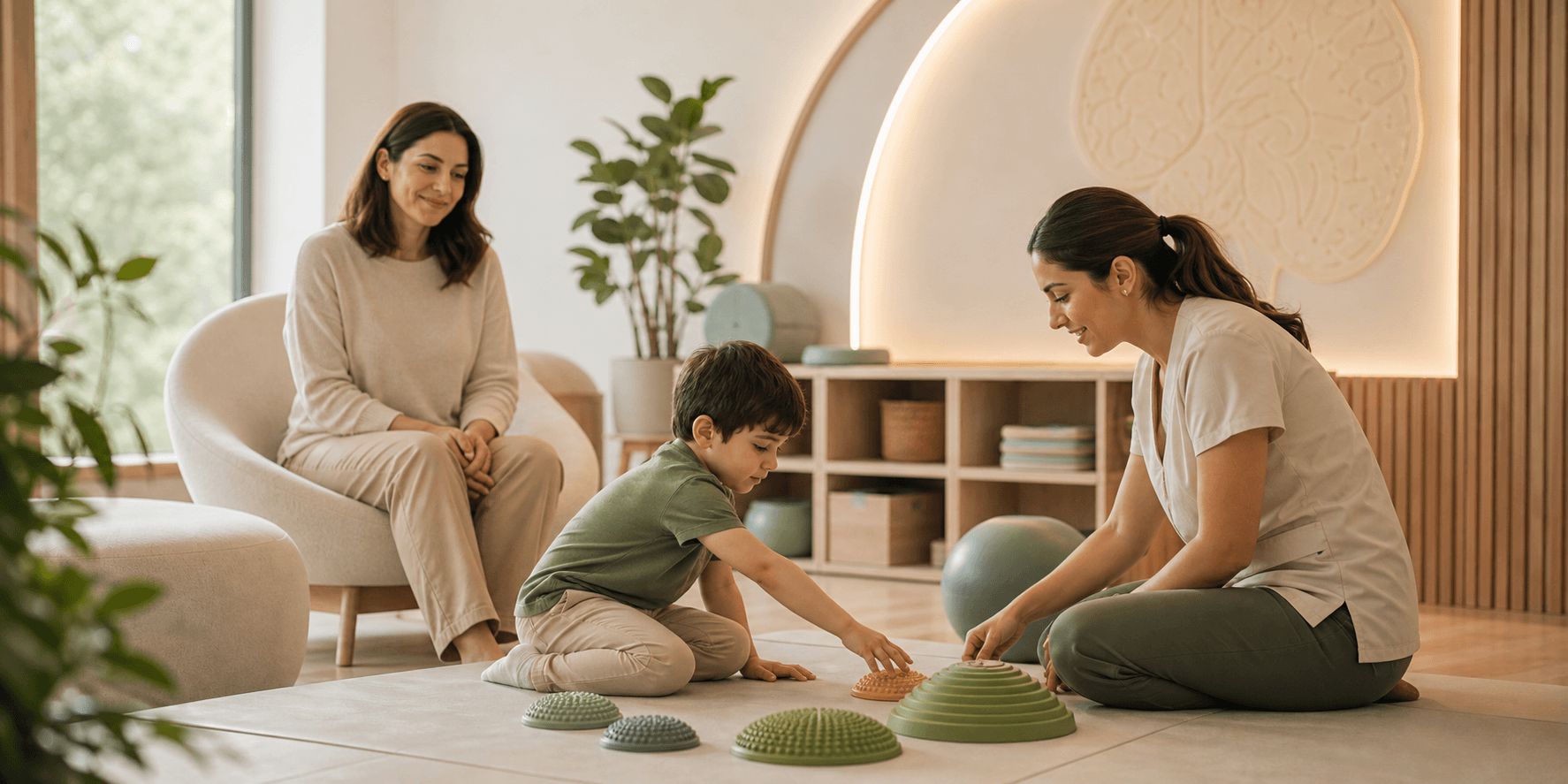
Even when a program is intensive, the rhythm must remain humane. Repeated listening blocks, restorative breaks, sensory regulation, movement, quiet activities, and parent guidance all matter.

Multilingual access, cross-border coordination, and remote follow-up make more sense when they are presented as one connected system.
Families need more than a method alone. They need a place in Yerevan, a daily rhythm of therapy, an experienced team, and continuity after the intensive stay.
The center brings together first evaluation, therapeutic stays, family guidance, and music-led auditory therapy in one medically serious environment.
A day of therapy is organized around repeated listening work, rest periods, movement, observation, and enough calm for the child to integrate what is being asked.
Because the ear is involved in both hearing and balance, the therapeutic program can support attention, posture, communication readiness, and sensory organization.
Families do not leave with sessions behind them and no map. They leave with explanations, home guidance, and a clearer sense of the next cycle.
Multilingual access, cross-border coordination, and remote follow-up make more sense when they are presented as one connected system.
The therapeutic system uses prepared music and voice material, with carefully modulated sound filtering, to engage listening in a structured way. The aim is not to make dramatic claims, but to support auditory processing, regulation, balance, and communication readiness within a supervised pediatric framework.
Therapy relies on selected sound material used in a structured way so listening can be exercised progressively rather than left passive.
Alternating sound contrasts may be used to challenge listening gently, always according to the child’s tolerance and the clinical goals of the phase.
Because auditory and vestibular systems work together, listening-based therapy may also influence posture, timing, regulation, and readiness to engage.
Parents receive a clear explanation of what is being trained, how the child is responding, and whether the next cycle should be continued, adapted, or paused.
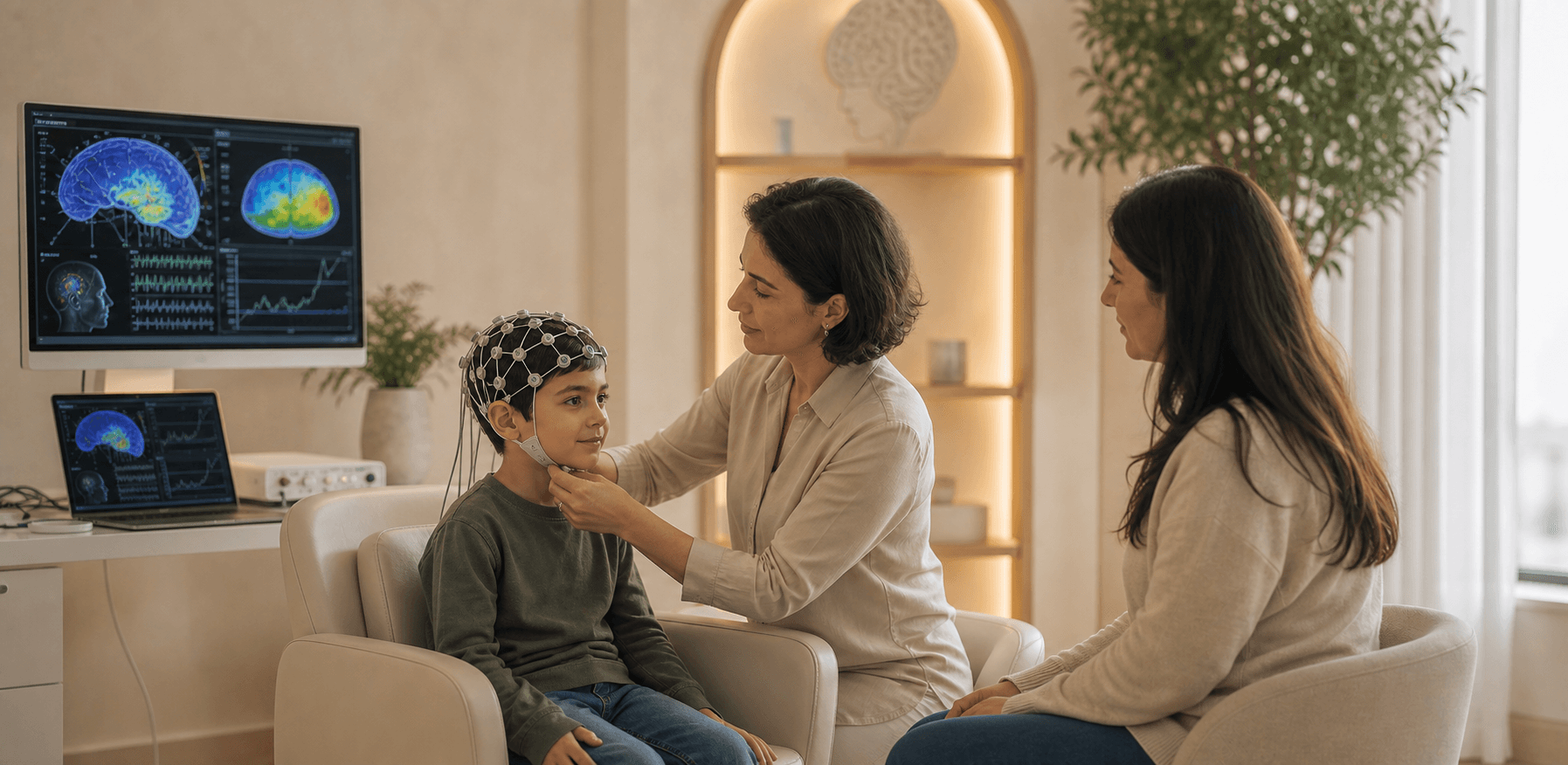
The same principle guides both the institute and the website: clinical seriousness without intimidation, and therapeutic explanation without oversimplification.
We avoid exaggerated claims and explain auditory brain stimulation in a measured way: music-led, personalized, supervised, and part of a broader pediatric care pathway. Measured language is not a marketing choice. It is part of ethical care.
The work is inspired by the listening-based clinical tradition associated with Professor Alfred A. Tomatis, while remaining supervised, pediatric, and ethically positioned as complementary care.
Parents receive understandable explanations about evaluation, listening sessions, pauses, daily rhythm, and what the child may be experiencing during therapy.
Therapy is carried by clinicians, therapists, and coordinators who work together around listening, neurodevelopment, regulation, and daily family support.
No method is presented as a miracle. Music-based auditory stimulation is positioned carefully within the child’s broader developmental and medical care.
These sample testimonials reflect what matters most to families: understanding the method, feeling held by the team, and seeing that the daily rhythm is calm as well as serious.
“The music sessions were carefully paced and never felt theatrical. We finally understood why listening, pauses, and family guidance all belonged to the same program.”
Mariam A.
Parent, first evaluation visit
“What reassured us most was the rhythm of the day. There was real therapy, but also calm, explanation, and enough recovery time for our child to stay available.”
Arsen S.
Parent, family traveling from abroad
“As a therapist, I was looking for a center where listening-based work, music, and pediatric judgment were treated seriously. The team culture felt disciplined and humane.”
Narine T.
Pediatric therapist, visiting clinician
Clear answers can ease pressure early. The full FAQ goes deeper into listening assessment, therapy by music, daily rhythm, travel, family involvement, and long-term follow-up.
No. Neuravis presents its work as complementary, supervised, and coordinated with the child’s broader medical and therapeutic care whenever possible.
The first step is designed to help the team understand the child and the family, not to rush toward a standard answer. It may include developmental history, daily challenges, functional observation, review of previous care, and when relevant a listening assessment or another complementary tool.
It is not the same as a conventional hearing test performed under ideal conditions. It helps the team understand how the child uses sound in everyday life, including listening pattern, auditory laterality, sensory load, and clues related to attention, language, balance, or fatigue.
Because therapy is adjusted over time. As regulation, listening, participation, or communication change, the team may need to refine the pace, the exercises, or the next phase of the program.